Drywall screw
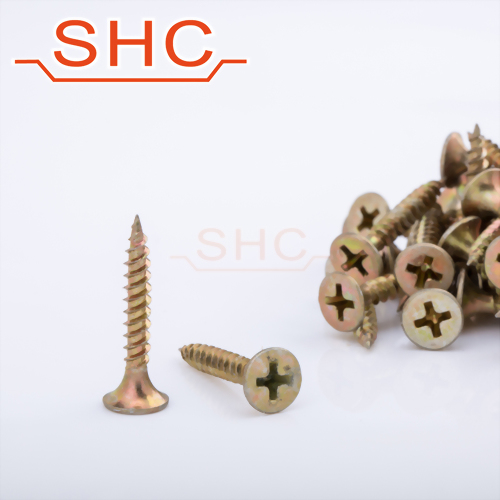
Drywall screws are used for fastening sheets of drywall to wall studs or ceiling joists. Compared to regular screws, drywall screws have deeper threads. This helps prevent the screws from being dislodged easily from the drywall.
Drywall screws are made of steel. In order to drill them into the drywall, a power screwdriver is needed. Sometimes plastic anchors are used together with drywall screws. They help balance the weight of a hung object evenly over the surface.
Drywall Screws Features
The head of a drywall screw is shaped like the bell end of a bugle. This is why it is called a bugle head. This shape helps the screw stay in place. It helps not to tear the outer paper layer of the drywall. With the bugle head, the drywall screw can easily embed itself into the drywall. This results in a recessed finish that can be filled with a filling substance then painted over to give a smooth finish.
There are drywall screws that have sharp points. With a sharp point, it would be easier to stab the screw onto the drywall paper and get it started.
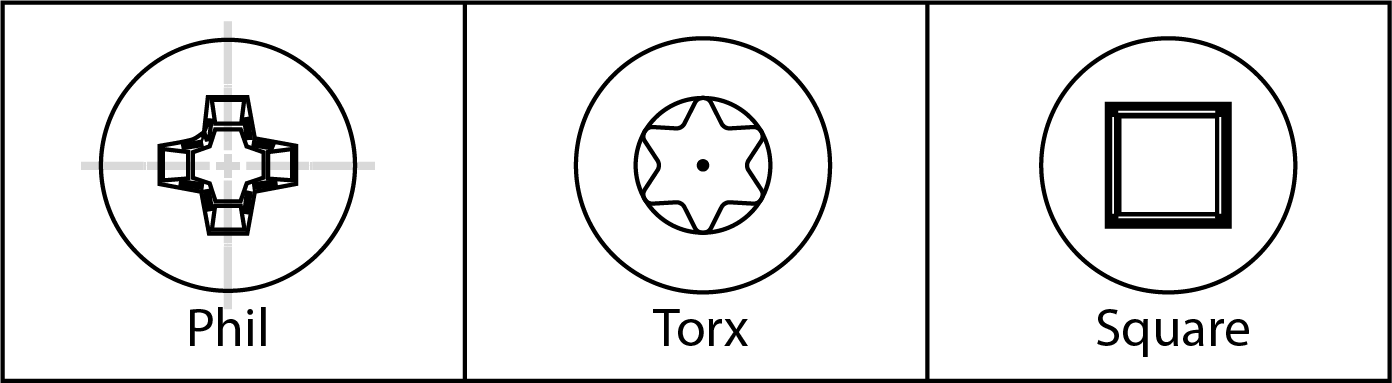
A #2 Phillips head drill-driver bit is usually needed for most drywall screws. While other construction screws are already using Torx or square heads and not Phillips head, most drywall screws still use the Phillips head.
To resist corrosion, black drywall screws have a phosphate coating. Other types of drywall screws have a thin vinyl coating that makes them even more corrosion-resistant. Because these have slippery shanks, they are very easy to draw in.
Surface
Thread Size:
#6, #7, #8, #10 (M3.5, M3.9, M4.2, M4.8)
Length
3/4" to 9-1/2" (19 to 240mm)
Phosphate (grey / black), Zinc Plated (clear / white / yellow), Coating (Geomet, Dacrotized, Ruspert etc.), Mechanically Zinc plating etc.
Recess Type
Head Type

Thread Type

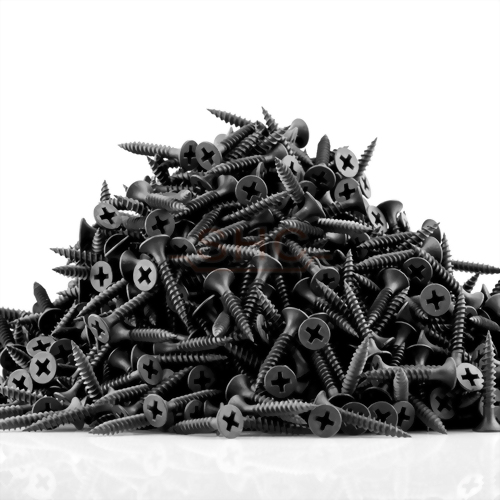
Drywall screw bugle head black phosphate
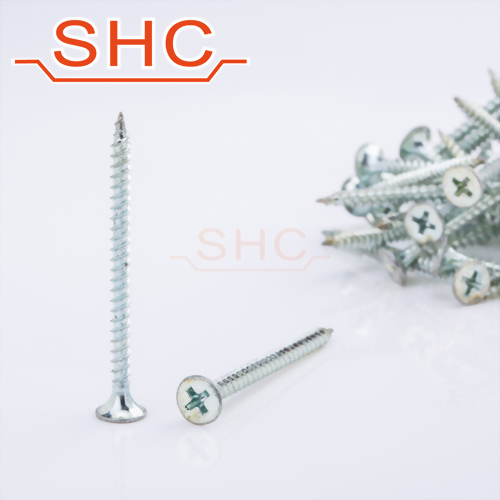
Drywall screw bugle head zinc plating
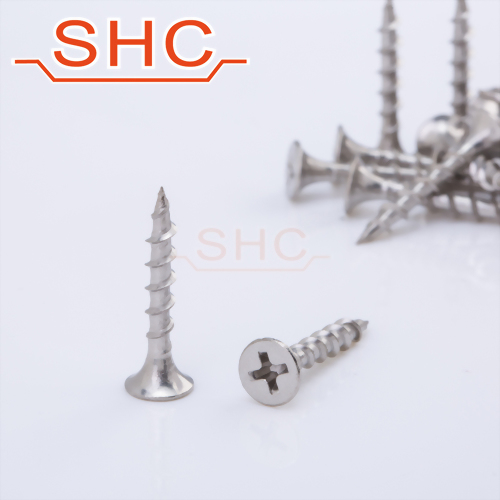
Drywall screw A2/A4 stainless steel bugle head